
About
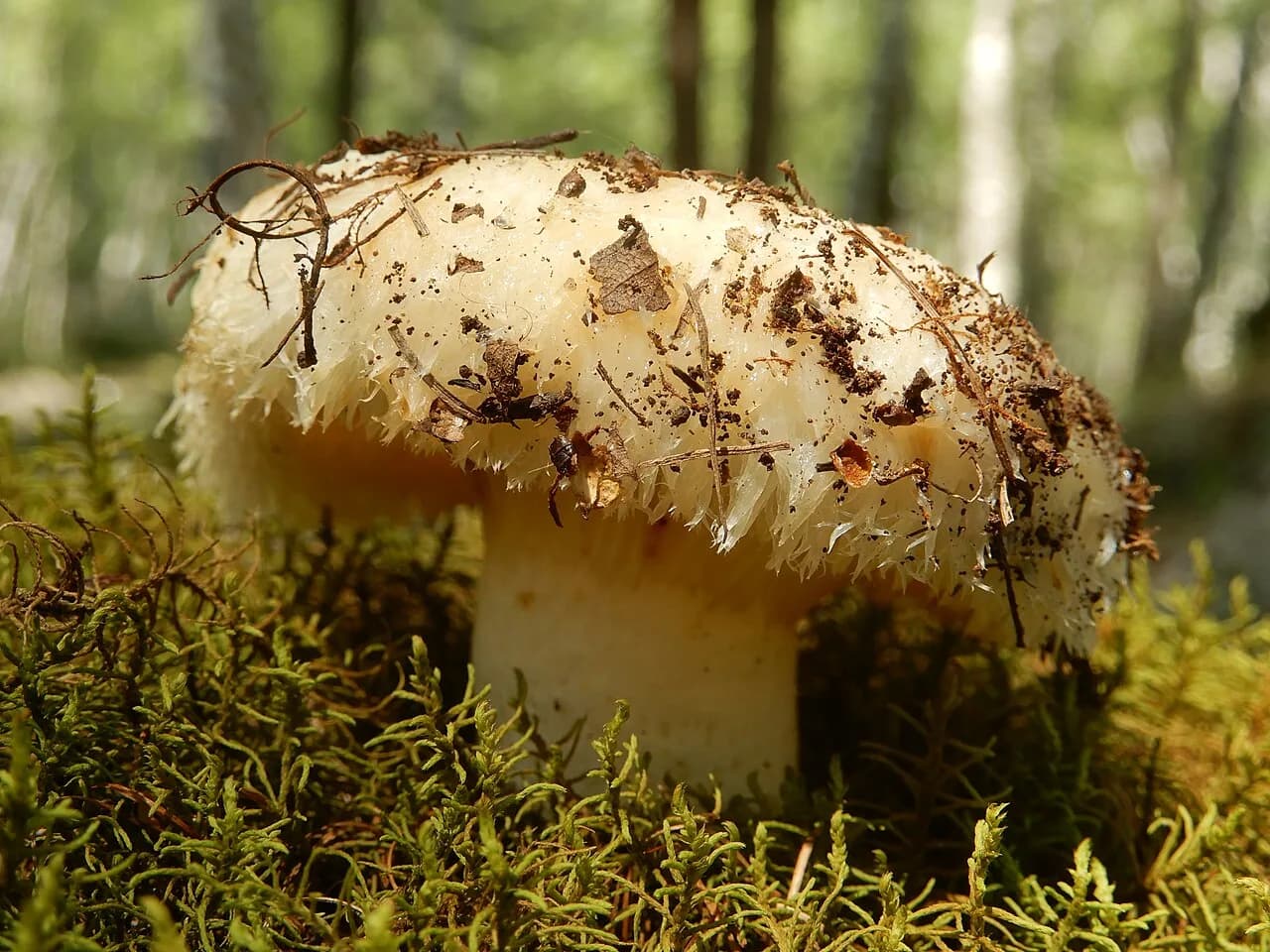
Rollrim milkcap (*Lactarius resimus*) is a pale forest milk cap with firm flesh. It is gathered in summer and autumn in mixed woods.
Fresh harvest season
An orientation window for local open-field harvest in the regions already documented in the atlas — not retail, import, or storage availability.
Atlas regions summary: July 1 – September 30
Regions with data: Moscow OblastLeningrad OblastRepublic of Karelia
By region
| Region | Season | Peak | Confidence |
|---|---|---|---|
| Moscow Oblast | August 1 – September 30 | — | Approximate |
| Leningrad Oblast | July 1 – September 30 | — | Approximate |
| Republic of Karelia | July 1 – September 30 | — | Approximate |
In the kitchen
Milk caps are most often salted. They are usually soaked before salting.
Seasonality by region
Republic of Karelia(RU-KR)
Season: July – September; Beginning; Active; Ending BeginningActiveEnding
- Season
- July 1 – September 30
- Confidence
- Approximate
Evidence
True milk cap. Shubin 1976: birch and mixed woods; “milk caps” July–September. Black milk cap is a separate account, not this product. Start 1 July; end 30 September. Matching Leningrad Oblast (catalog July–September) is independent month-level compression, not a copied row. No explicit peak. Moscow is not copied.
Sources
Mushrooms of the northern forests (Shubin, 1976): layers and months for Petrozavodsk latitude
Shubin V.I. — Griby severnykh lesov, 3rd ed., Petrozavodsk: Karelia
Layer calendar compiled for Petrozavodsk latitude (not Leningrad Oblast): 1st layer second half of June, short and few; 2nd 1st–2nd decades of July; 3rd from 2nd decade of August through October, often peaking in September. Same-book species accounts: chanterelle July–October; birch and aspen bolete June–October; true milk cap July–September (black milk cap separate); saffron milk cap July–October; autumn honey fungus abundant about two weeks, usually first half of September (1968 early August is an exception). Summer honey fungus June–August is not this product. Porcini is not modelled from this row (1986 monograph). Catalog morel (Morchella) uses a separate source row; April–May Gyromitra is not that product.
Leningrad Oblast(RU-LEN)
Season: July – September; Beginning; Active; Ending BeginningActiveEnding
- Season
- July 1 – September 30
- Confidence
- Approximate
Evidence
True milk cap. 2015: Lactarius resimus July–September; mass collection 11 September 1993; also 5 and 26 July 1995. Start 1 July; end 30 September. Matching Karelia at month level is independent reserve-catalog reading, not a copy of Shubin. No explicit peak (one-off pick dates ≠ a stable peak window). Black milk cap is not this product. Moscow is not copied.
Sources
Macromycetes of Nizhnesvirsky Reserve (Stolyarskaya et al., 2015)
Zmitrovich I.V., Stolyarskaya M.V. et al.; ed. Stolyarskaya M.V. — St Petersburg, ISBN 978-5-4386-0925-4
Annotated list of 806 species, north-east Leningrad Oblast (Lodeynopolsky District, middle taiga), not the whole subject and not the Karelian Isthmus. Chanterelle June–October, very frequent; porcini and pine porcini June–October; birch bolete June–September, very frequent; aspen bolete July–September; northern honey fungus (Armillaria borealis) August–September, layer usually short; saffron milk cap August–October, rather rare (1993 plot layer 2–15 October); true milk cap July–September. Morel is rare; 28 June 1993 mass on a burn is not a typical oblast harvest. Shubin’s Karelian calendar and Moscow handbooks are not copied.
Moscow Oblast(RU-MOS)
Season: August – September; Beginning; Active; Ending BeginningActiveEnding
- Season
- August 1 – September 30
- Confidence
- Approximate
Evidence
True milk cap, not black milk cap. Smirnyakov 1992: first in the 3rd decade of July, abundant mid-August through the 1st decade of September. Gorlenko 1986: true milk cap August–September. Start 1 August; end 30 September with that table, Smirnyakov October is not extended. No explicit peak. Leningrad and Voronezh are not copied.
Sources
Mushroom-picker calendar for the central oblasts of European Russia (Smirnyakov, Koshcheev, 1992)
Smirnyakov Yu.I., Koshcheev A.K., Koshcheev A.A. — Sputnik gribnika
Appendix: decade calendar (May–October). Legend: 0 first fruiting bodies, “-” mass growth, х abundant fruiting, = warm autumn only. Does not name Moscow Oblast separately; “central oblasts” is the belt that includes it. A handbook, not a multi-year plot study.
Phenological calendar: morels, saffron milk cap, true milk cap (Gorlenko, Garibova, Sidorova, 1986)
Gorlenko M.V., Garibova L.V., Sidorova I.I. — Vsyo o gribakh
Monthly presence table for the middle belt. Morels IV–VI (false morels / Gyromitra are a separate row). Spruce and pine saffron milk caps VIII–X. True milk cap VIII–IX (black milk cap is a separate VII–X row). Prose: morels from mid-April or early May, in cool weather until mid-June; saffron milk caps and milk caps from the second half of August to the end of September. No intra-month dates and no named oblast.