
About
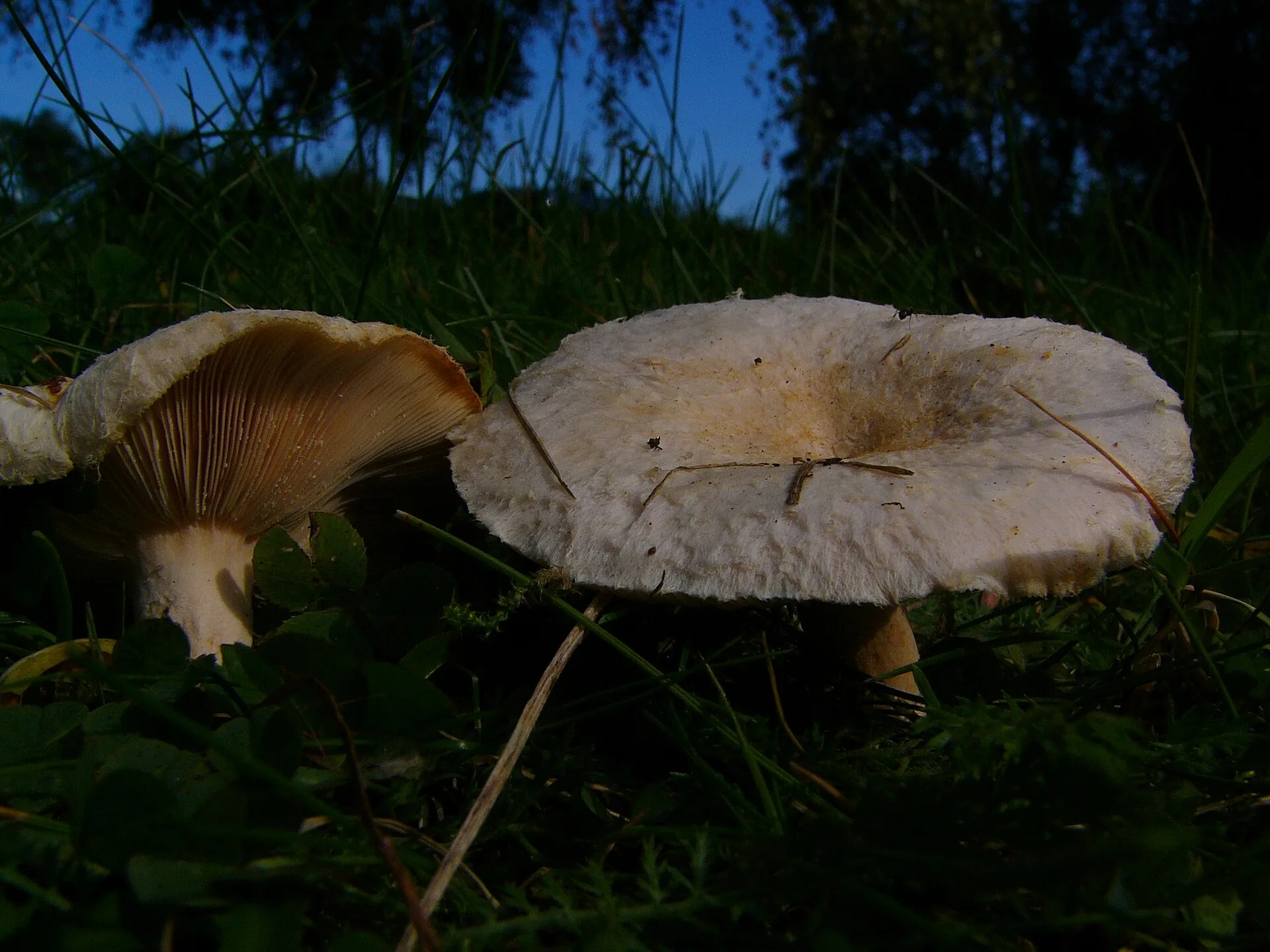
Woolly milkcap (*Lactarius torminosus*) is a gilled forest mushroom with a pinkish cap and a woolly margin. It is gathered in summer and autumn in mixed woods, often near birch.
Fresh harvest season
An orientation window for local open-field harvest in the regions already documented in the atlas — not retail, import, or storage availability.
Atlas regions summary: June 1 – October 31
Regions with data: Moscow OblastLeningrad OblastRepublic of Karelia
By region
| Region | Season | Peak | Confidence |
|---|---|---|---|
| Moscow Oblast | August – October | — | Approximate |
| Leningrad Oblast | June – September | — | Approximate |
| Republic of Karelia | July – October | — | Approximate |
In the kitchen
Woolly milkcaps are most often salted and pickled. They are usually soaked before salting to soften the sharpness of the milky juice.
Seasonality by region
Republic of Karelia(RU-KR)
Season: July – October; Beginning; Active; Ending BeginningActiveEnding
- Season
- July – October
- Confidence
- Approximate
Evidence
Woolly milkcap (Lactarius torminosus), Wild v3 CORE (rule-card r2; seasonality-v3-wild-expansion-001). Pathway WILD-INSTITUTIONAL-TRIANGULATION, APPROXIMATE. KarRC: fruiting from July through October → CORE July–October MONTH/MONTH (07-01–10-31). Predtechenskaya (Gubdaily, 22 Jun 2022): woolly milkcaps only in autumn (not June early boletes) — corroboration. Shubin 1976 soft frost-sensitivity corroboration. KarRC frost wording is weather-relative caveat, not END. LO Stolyarskaya VI–IX and Moscow not copied. Peak unset.
Sources
KarRC RAS: Woolly milkcap (Lactarius torminosus) — fruiting July–October
Karelian Research Centre RAS
Class B institutional BOTH encoded as START row: fruiting July–October sets CORE START July MONTH and CORE END October MONTH. Frost is caveat only.
Guberniya Daily / KarRC Forest Institute
Class C: autumn-only corroboration; does not shrink KarRC July CORE START.
Mushrooms of the northern forests (Shubin, 1976): layers and months for Petrozavodsk latitude
Shubin V.I. — Griby severnykh lesov, 3rd ed., Petrozavodsk: Karelia
Existing handbook: woolly milkcap more frost-sensitive than saffron milk-cap — soft ecological corroboration, not bounds.
Leningrad Oblast(RU-LEN)
Season: June – September; Beginning; Active; Ending BeginningActiveEnding
- Season
- June – September
- Confidence
- Approximate
Evidence
Woolly milkcap (Lactarius torminosus). Nizhnesvirsky Reserve macromycetes catalog 2015: L. torminosus June–September. Start 1 June; end 30 September. One NE reserve ≠ the whole oblast — same caution class as other integrated LO mushrooms. Peak unset. Karelia and Moscow are not copied.
Sources
Macromycetes of Nizhnesvirsky Reserve (Stolyarskaya et al., 2015)
Zmitrovich I.V., Stolyarskaya M.V. et al.; ed. Stolyarskaya M.V. — St Petersburg, ISBN 978-5-4386-0925-4
Annotated list of 806 species, north-east Leningrad Oblast (Lodeynopolsky District, middle taiga), not the whole subject and not the Karelian Isthmus. Chanterelle June–October, very frequent; porcini and pine porcini June–October; birch bolete June–September, very frequent; aspen bolete July–September; northern honey fungus (Armillaria borealis) August–September, layer usually short; saffron milk cap August–October, rather rare (1993 plot layer 2–15 October); true milk cap July–September. Morel is rare; 28 June 1993 mass on a burn is not a typical oblast harvest. Shubin’s Karelian calendar and Moscow handbooks are not copied.
Moscow Oblast(RU-MOS)
Season: August – October; Beginning; Active; Ending BeginningActiveEnding
- Season
- August – October
- Confidence
- Approximate
Evidence
Woolly milkcap, Wild v3 CORE (rule-card r2; seasonality-v3-wild-expansion-001). Pathway WILD-MIXED, APPROXIMATE. Gorlenko 1986 (middle belt): table VIII–X + August abundance prose → CORE August–October MONTH/MONTH (08-01–10-31); August is CORE abundance, not OUTER onset. Fedyaev (Podmoskovye): appears in August, mass in September; until frost is caveat only. News.ru is multi-district September CORROBORATION. October END from Gorlenko table X +, independent of frost. Karelia/LO not copied. Peak unset.
Sources
Gorlenko M.V., Garibova L.V., Sidorova I.I. — Vsyo o gribakh
Class B BOTH as START row: Woolly milkcap VIII–X + August abundance → CORE START August MONTH and CORE END October MONTH.
Fedyaev V.M. Mushrooms — a wonder of nature: woolly milkcap in Moscow Oblast
Fedyaev V.M.
Class C Podmoskovye: appears in August / mass in September; until frost is weather-relative caveat, not END.
News.ru: milk-caps and woolly milkcaps in September — Moscow Oblast birch sites (multi-district)
News.ru
Class C multi-district September mass corroboration (Istra/Volokolamsk/Riga/Serpukhov/Chekhov/Pushkino).